Solar Water Heater sets the stage for an enthralling narrative that delves into the transformative power of solar energy. Imagine harnessing the sun’s energy to heat your water, reducing your energy bills while contributing to a sustainable future. Solar water heating systems operate on fundamental principles of energy conversion, utilizing innovative collectors to efficiently capture sunlight and transform it into heat.
With a variety of components working in harmony, solar water heaters not only provide a reliable source of hot water but also stand as a testament to eco-friendly technology.
As we explore the environmental benefits of these systems, we uncover how they significantly lower carbon footprints compared to traditional heating methods, fostering energy conservation and sustainability. The future is bright with solar water heaters leading the way in ecological advantages and innovative energy solutions.
The fundamental principles behind solar water heating systems
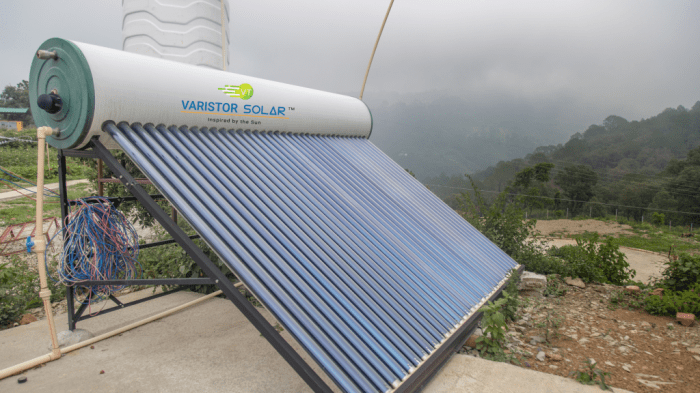
Solar water heating systems harness the sun’s energy to provide hot water for residential, commercial, and industrial use. These systems utilize the principles of thermodynamics and physics to convert sunlight into heat, making them a sustainable choice for energy-efficient hot water solutions. Understanding the mechanisms at play is essential for appreciating the benefits and applications of solar water heaters.The process begins with the conversion of solar radiation into thermal energy.
Solar collectors absorb sunlight and convert it into heat, which is then transferred to water circulating within the system. The efficiency of this conversion varies significantly based on the type of collector used and its design. To ensure optimal performance, several key components work in tandem within a solar water heater system.
Basic physics of solar energy conversion into heat
Solar water heating relies fundamentally on the absorption of solar radiation, where the energy from the sun is converted into heat. The primary approach involves the following principles:
Absorption
Solar collectors are designed with materials that have high absorptivity, allowing them to capture a maximum amount of solar energy. Black surfaces are commonly utilized due to their ability to absorb heat effectively.
Conduction
Once the solar energy is absorbed, heat is conducted through the collector materials into the fluid (usually water or antifreeze) that circulates within the collector.
Convection
The heated fluid rises due to its lower density, and this convection cycle facilitates the continuous movement of water within the system, transferring heat to the storage tank.
Thermal energy conversion efficiency is maximized when the collector surface is adequately insulated to minimize heat loss.
Types of solar collectors and their efficiency
Solar collectors can be categorized mainly into three types: flat-plate collectors, evacuated tube collectors, and concentrating solar collectors. Each type has unique functionalities and efficiencies:
Flat-Plate Collectors
These are the most widely used systems, consisting of a rectangular box with a transparent cover. They work well in moderate climates, absorbing diffuse sunlight effectively. Their efficiency typically ranges from 50% to 70%.
Discover the crucial elements that make Essential electronic equipment for modern households the top choice.
Evacuated Tube Collectors
These collectors feature rows of glass tubes that contain a vacuum, which minimizes heat loss. They perform exceptionally well in colder climates or during cloudy conditions, with efficiencies that can reach up to 90%.
Concentrating Solar Collectors
Utilizing mirrors or lenses, these collectors focus sunlight onto a small area, significantly increasing the heat generated. They are primarily used in large-scale applications and can achieve efficiencies higher than 80%.
Key components of a solar water heater system
A solar water heating system comprises several integral components, each playing a crucial role in system efficiency and effectiveness. These include:
Solar Collectors
The heart of the system, where solar energy is captured and converted into heat.
Storage Tank
Hot water is stored here until it is needed, maintaining the availability of heated water.
Pump
Circulates the water or heat transfer fluid through the system, facilitating the flow between collectors and the storage tank.
Controller
Monitors temperature and flow to optimize system performance, ensuring efficient operation.
Heat Exchanger
Transfers heat from the collector fluid to the potable water, maintaining safe and healthy water quality.Understanding these components provides valuable insight into how solar water heating systems function efficiently and sustainably, contributing to energy savings and environmental conservation.
The environmental benefits of using solar water heaters
The growing concern over climate change and environmental degradation has made the transition to renewable energy sources more crucial than ever. Among these, solar water heaters stand out as a sustainable solution that not only provides a reliable source of hot water but also significantly reduces the environmental impact associated with conventional heating methods.Solar water heaters offer a remarkable reduction in carbon footprints when compared to traditional gas or electric water heating systems.
By harnessing the sun’s energy, these systems eliminate the need for fossil fuels, thus preventing CO2 emissions and contributing to a cleaner atmosphere. The switch to solar water heaters can lead to a significant decrease in greenhouse gas emissions, with studies showing that a typical household can reduce its carbon output by up to 1.5 tons annually.
Impact on energy conservation and sustainability
The adoption of solar water heaters plays a vital role in energy conservation and promotes sustainability in several ways:
Reduction in Energy Demand
By utilizing solar energy for heating water, households and businesses can drastically cut down their reliance on grid electricity or fossil fuels, leading to overall energy savings.
Lower Utility Bills
By generating hot water from solar energy, users can experience decreased electricity costs, allowing more funds to be allocated to other eco-friendly innovations or community initiatives.
Resource Conservation
Traditional water heating methods often involve extensive resource usage, including water and energy. Solar water heaters require minimal resources for operation, thereby conserving precious natural materials.
“Switching to solar water heaters not only saves money but also contributes significantly to protecting our planet for future generations.”
Long-term ecological advantages of widespread solar water heater adoption
The long-term ecological benefits of adopting solar water heaters extend beyond individual households. Broad implementation can have profound effects on the environment, including:
Reduced Water Pollution
Traditional heating methods often involve the release of harmful pollutants into water systems. In contrast, solar water heaters operate without the combustion of fossil fuels, thus protecting aquatic ecosystems from contamination.
Mitigation of Climate Change
As more households install solar water heaters, the collective reduction in fossil fuel dependency contributes to climate change mitigation efforts. This transition plays a crucial role in meeting international climate targets.
Enhanced Biodiversity
By minimizing pollution and conserving water resources, solar water heaters help create a more favorable environment for various plant and animal species, promoting biodiversity in local ecosystems.The integration of solar water heaters into everyday life not only enhances energy efficiency but also supports a sustainable future. By embracing this technology, individuals and communities can contribute to a healthier planet, ensuring that natural resources are preserved for generations to come.
Comparing solar water heaters with traditional water heating methods
Solar water heaters have become increasingly popular as a sustainable alternative to traditional water heating methods. They harness the sun’s energy to provide hot water efficiently, making them an attractive option for homeowners looking to reduce energy bills and their environmental impact. This comparison explores the differences in efficiency, cost, and maintenance needs between solar water heaters and conventional systems.
Efficiency, Cost, and Maintenance Comparison
Understanding the key differences in efficiency, cost, and maintenance can help consumers make informed decisions about their water heating systems.
| Aspect | Solar Water Heaters | Traditional Water Heaters |
|---|---|---|
| Efficiency | Typically 50-80% efficient, utilizing solar energy | Usually 60-70% efficient, relying on electricity or gas |
| Initial Cost | Higher upfront cost, around $5,000-$10,000 including installation | Lower upfront cost, around $500-$2,500 depending on the type |
| Maintenance Needs | Requires minimal maintenance, typically annual checks | Requires more frequent maintenance, including tank flushes and potential repairs |
Solar water heaters offer significant efficiency advantages when compared to traditional systems. While the initial investment may be higher, the long-term savings can be substantial.
Installation Processes and Space Requirements
The installation process for solar water heaters differs greatly from that of traditional water heaters. This section highlights the essential distinctions.Solar water heaters typically require a more complex installation process, including the mounting of solar panels on rooftops and the integration of storage tanks and controls. This often necessitates professional installation to ensure optimal performance. Space requirements can also vary, as solar collectors require adequate sunlight exposure, which may limit placement options.In contrast, traditional water heaters have straightforward installation procedures and can easily fit into existing spaces in homes.
They generally require less structural consideration, making them a much quicker solution for immediate hot water needs.
Learn about more about the process of What are the best electronic products for home use in the field.
Cost Savings Over Time
Solar water heaters provide remarkable cost savings over their lifespan, making them a compelling long-term investment. By utilizing free solar energy, homeowners can expect to see their energy bills significantly decrease. For example, a family using a solar water heater could save between $300 and $500 annually on energy costs. Additionally, many regions offer tax credits, rebates, or incentives that can further lessen the financial burden of installation.Over a typical lifespan of 20 years, these savings can accumulate to tens of thousands of dollars, making solar water heaters not just an environmentally friendly option but also a financially savvy choice.
The financial aspects of investing in solar water heaters
Investing in solar water heating systems is a strategic financial decision that can lead to significant long-term savings and environmental benefits. Understanding the financial components is essential to appreciate the value of solar water heaters fully. This section covers the initial investment costs, available incentives, and the return on investment (ROI) associated with solar water heating systems.
Get the entire information you require about How to leverage social media for electronic promos on this page.
Initial investment costs for solar water heating systems
The initial investment for solar water heaters can vary based on system size, type, and installation requirements. On average, homeowners can expect to pay between $3,500 and $7,000 for a solar water heating system, including installation. Factors influencing the cost include:
- System Type: Active systems, which include pumps and controls, can be more expensive than passive systems, which rely on natural convection.
- Installation Complexity: Rooftop installations may incur additional costs depending on roof type and angle.
- Size and Capacity: Larger systems that cater to higher hot water demand will typically cost more.
Government incentives and subsidies
Government support for solar water heaters can significantly reduce the overall financial burden of installation. Various incentives are available, which may include:
- Federal Tax Credits: Homeowners can claim a tax credit of up to 26% of the installation costs through the Federal Investment Tax Credit (ITC), applicable until 2023.
- State Rebates: Many states offer local rebates or grants for solar installations, which can further lower upfront costs. For example, California has programs offering rebates as high as $1,500.
- Property Tax Exemptions: Some states exempt solar installations from property tax increases, allowing homeowners to save even more.
Return on investment (ROI) and savings on utility bills
Investing in solar water heaters can yield substantial savings over time. An effective way to evaluate the financial benefits is to consider the ROI, which reflects the money saved compared to the installation cost. Homeowners can generally expect a payback period of 4 to 8 years, depending on local energy prices and usage patterns.The potential savings on utility bills can be quite significant.
For instance, a typical household using a solar water heating system may see reductions in energy bills by 50% to 80%, translating to savings of $200 to $400 annually.
“By harnessing the power of the sun, not only do you reduce your carbon footprint, but you also enhance your financial stability through reduced energy costs.”
In summary, the financial aspects of solar water heaters reflect a worthy investment that combines immediate costs with long-term savings, supported by various incentives. As the world moves toward sustainable energy solutions, solar water heaters present both economic and environmental benefits that cannot be overlooked.
Common challenges and solutions associated with solar water heaters
Solar water heaters are an efficient way to harness solar energy for domestic water heating, but users may face several challenges during their operation. Understanding these common issues and their solutions can significantly enhance the performance and longevity of solar water heating systems. This guide will address typical problems, provide troubleshooting tips, and share successful case studies that can help users effectively manage their solar water heaters.
Insufficient Hot Water Production
One of the most common challenges faced by homeowners using solar water heaters is insufficient hot water production. This can be particularly frustrating during peak usage times or in colder weather conditions. Factors contributing to this issue include inadequate solar radiation, incorrect system sizing, and improper installation.To address this challenge, consider the following solutions:
- Ensure that the solar collector is properly oriented and free of obstructions such as trees or buildings that could cast shadows.
- Evaluate the system size against household water consumption. For larger households, consider upgrading to a larger collector or storage tank.
- Regular maintenance checks can help identify issues such as sediment buildup in the tank, which can affect heating efficiency.
Proper orientation of solar collectors can improve efficiency by up to 30%.
System Leaks
Leaks in solar water heating systems can lead to costly repairs and reduced efficiency. Common causes of leaks include worn-out seals, loose connections, or damage to pipes and tanks.To resolve leakage issues, users should:
- Inspect all connections and fittings regularly to ensure they are tight and secure.
- Replace worn-out seals and gaskets immediately to prevent further leaks.
- Consider upgrading to more durable materials for pipes and tanks if leaks are a persistent problem.
Prompt repair of leaks can prevent additional damage and ensure system efficiency is maintained.
Frost Damage, Solar Water Heater
In regions with colder climates, frost can cause serious damage to solar water heaters if proper precautions are not taken. Freezing temperatures can lead to cracked pipes and tanks.To protect against frost damage:
- Install anti-freeze systems that circulate a protective fluid in colder months.
- Use insulated pipes and storage tanks to minimize heat loss and protect against freezing.
- Consider a drain-back system that allows water to drain out of the collector when temperatures drop.
Implementing frost protection measures can extend the lifespan of solar water heating systems significantly.
Case Study: Successful Problem Resolution
A residential case in Colorado highlights the effectiveness of addressing common solar water heater issues. After experiencing insufficient hot water production, the homeowner consulted a solar technician. The technician discovered that the solar collector was partially shaded by a nearby tree. By trimming the tree and adjusting the angle of the collector, the system’s efficiency improved drastically, resulting in a 40% increase in hot water availability.This example illustrates the importance of regular maintenance and the benefits of professional assessment in resolving common challenges associated with solar water heaters.
The future of solar water heating technology
As we move towards a more sustainable future, solar water heating technology stands at the forefront of innovation. With a growing emphasis on energy efficiency and environmental responsibility, advancements in this field promise to revolutionize how we harness the sun’s energy for our daily needs. Emerging technologies and trends are set to reshape the landscape of solar water heating, making it more accessible and efficient for consumers everywhere.One of the most exciting areas of development in solar water heating technology is the emergence of advanced materials and designs.
Innovations such as highly efficient photovoltaic thermal (PVT) systems combine solar electricity generation and thermal energy capture, optimizing the utility of solar panels. These systems not only enhance the efficiency of energy capture but also reduce installation space requirements, making them ideal for urban environments where space is limited. Additionally, the use of nanomaterials is paving the way for better heat absorption and retention, further enhancing system performance.
Integration with smart home systems and IoT
The integration of solar water heating systems with smart home technology and the Internet of Things (IoT) represents a significant trend in the industry. This integration allows homeowners to monitor and control their solar water heating systems remotely, optimizing energy usage and improving efficiency. Smart sensors can track water temperatures, usage patterns, and energy production, providing real-time data that empowers users to make informed decisions about their energy consumption.The benefits of this integration are profound.
For instance, when paired with smart thermostats and home energy management systems, solar water heaters can adapt to the household’s energy demand, ensuring optimal performance and reducing energy costs. Furthermore, predictive analytics can analyze historical usage data, enabling proactive adjustments to maximize efficiency. As smart home technology continues to evolve, the potential for more sophisticated solar water heating solutions will increase.
Trends in consumer preferences
Consumer preferences are shifting significantly as awareness of environmental issues and the need for sustainable solutions grow. Today’s consumers are leaning towards energy-efficient systems that not only provide cost savings but also contribute to a greener planet. As a result, the demand for solar water heating systems is on the rise, particularly among eco-conscious homeowners.Several notable trends are shaping future developments in solar water heating technology, including:
- Increased interest in energy independence, driving consumers to seek solutions that lessen reliance on traditional energy sources.
- A rise in government incentives and rebates for solar energy solutions, making adoption more financially accessible.
- The growing popularity of hybrid systems that combine solar water heating with other renewable technologies, such as geothermal or wind energy, to enhance overall efficiency.
- Consumer preference for modular and easily scalable systems that can be tailored to individual needs and property types.
As these trends continue to evolve, manufacturers and innovators in the solar water heating sector will be compelled to adapt their offerings to meet changing consumer demands. The focus will not only be on efficiency and cost-effectiveness but also on enhancing user experience through technology integration. The future of solar water heating technology is not just about harnessing the sun; it’s also about creating smarter, more responsive systems that empower consumers to take control of their energy consumption.
Installation and maintenance best practices for solar water heaters
Proper installation and diligent maintenance of solar water heaters are crucial to ensure their efficiency and longevity. Adopting best practices not only optimizes performance but also maximizes your investment in renewable energy. This guide Artikels the essential steps for installation and a comprehensive maintenance checklist to keep your solar water heater running smoothly throughout its lifespan.
Step-by-step process for proper installation
The installation of a solar water heater involves several critical steps that must be followed meticulously to guarantee optimal performance. The following process Artikels the essential stages:
1. Site Assessment
Evaluate the location for solar exposure. A south-facing roof with minimal shading is ideal for maximizing solar gain.
2. Select the System Type
Choose between active (pump-assisted) and passive (gravity-fed) systems based on your needs and local climate.
3. Gather Necessary Tools and Materials
Prepare tools such as wrenches, screwdrivers, and plumbing supplies, along with the solar collector and tank.
4. Mount the Collector
Securely attach the solar collector to the roof or designated area, ensuring that it is tilted at an optimal angle for sun exposure.
5. Connect Plumbing
Install pipes connecting the solar collector to the water tank, ensuring all seals are tight to prevent leaks.
6. Install the Storage Tank
Position the tank in an accessible area for maintenance, ensuring it is insulated to minimize heat loss.
7. Electrical Connections
For active systems, connect the pump and any necessary electrical components safely and in accordance with local codes.
8. Fill the System with Water
Slowly fill the system, checking for leaks and ensuring proper pressure.
9. Test the System
Activate the solar heater and monitor for functionality, checking that the water heats as expected.
Maintenance checklist for optimal performance
Regular maintenance is key to the longevity and efficiency of solar water heaters. Below is a checklist designed to ensure your system remains in peak condition:
Inspect the Collectors
Check for dirt, debris, or snow covering the solar collectors, which can impede performance.
Check for Leaks
Regularly examine all pipes, fittings, and connections for any signs of leaks or corrosion.
Flush the System
Remove sediment buildup from the tank and pipes at least once a year to maintain water quality and system efficiency.
Examine Insulation
Ensure the insulation on pipes and tanks is intact and free from wear to minimize heat loss.
Monitor Pressure
Keep an eye on system pressure, as fluctuating pressure can indicate a need for repairs or adjustments.
Review Controls
Test the thermostat and controls regularly to verify they are functioning correctly.
Importance of professional inspections
Scheduling professional inspections is essential for maintaining the efficiency and safety of your solar water heater. It’s recommended to have a certified technician inspect your system at least once a year. During these inspections, professionals can identify potential issues early, such as:
Assessing System Efficiency
Technicians can evaluate the performance of the solar collectors and storage tank, ensuring they operate at optimal levels.
Identifying Wear and Tear
Professional inspections allow for the detection of any signs of damage or degradation that may not be visible to the untrained eye.
Ensuring Compliance
Professionals can ensure that your installation meets local codes and regulations, safeguarding your investment.
Investing in regular maintenance and professional inspections is vital for the sustainability of solar water heaters, allowing you to enjoy the benefits of renewable energy for years to come.
Conclusive Thoughts
In conclusion, the solar water heater represents a smart investment for homeowners seeking both financial savings and environmental benefits. By understanding the technology, installation, and maintenance of these systems, individuals can enjoy the long-term rewards that come with this green energy solution. Embrace the future of energy efficiency today with solar water heaters and contribute to a cleaner, more sustainable planet.