Benefits of using technical analysis for cryptocurrency trading reveal the power of informed decision-making in the volatile world of digital currencies. By leveraging technical tools, traders can navigate the complexities of the market, enhancing their trading strategies and optimizing their chances of success. As the cryptocurrency landscape continues to evolve, understanding these benefits becomes essential for anyone looking to thrive in this dynamic arena.
From chart patterns that forecast market movements to key indicators that enhance trading precision, technical analysis equips traders with the insights needed to make strategic choices. By examining trading volume and recognizing market sentiment, traders can fine-tune their approaches, mitigate risks, and ultimately achieve better results in their trading endeavors. Embracing these analytical techniques not only empowers individual traders but also contributes to a more informed and efficient market overall.
Understanding the Fundamentals of Technical Tools in Trading
Technical analysis serves as a cornerstone for many traders in the cryptocurrency market, enabling them to make informed decisions based on historical price movements and trading volume. By leveraging technical tools, traders can enhance their strategies significantly, gaining insights that may not be apparent through fundamental analysis alone. The ability to read charts, identify trends, and use various indicators can provide a competitive edge in this volatile market.
The primary functions of technical tools include trend identification, momentum measurement, and volatility assessment. Traders utilize these functions to formulate their trading strategies effectively, optimizing their entries and exits. The utilization of these tools enables a more structured approach to trading, thereby minimizing emotional decision-making and enhancing consistency in trade execution.
Popular Technical Tools and Their Applications
In the cryptocurrency market, several technical tools stand out for their effectiveness and widespread use. Each tool serves a distinct purpose and can be applied in various trading scenarios. Below are some of the most common tools along with their applications:
- Moving Averages (MA): Moving averages smooth out price data to identify trends over a specific period. For example, traders might use a 50-day moving average to identify a bullish trend when the price crosses above this line.
- Relative Strength Index (RSI): This momentum indicator measures the speed and change of price movements. An RSI above 70 may indicate overbought conditions, while below 30 suggests oversold conditions, helping traders gauge entry and exit points.
- Bollinger Bands: These bands consist of a moving average and two standard deviation lines. Traders use them to assess volatility and identify potential price reversals when the price touches the upper or lower bands.
- Fibonacci Retracement: This tool helps identify potential support and resistance levels based on the Fibonacci sequence. Traders often use these levels to set target prices and stop-loss orders, optimizing their risk-reward ratios.
- Volume Indicators: High trading volume often confirms price trends. For instance, an increase in volume during a price rise suggests strong buying interest, reinforcing the bullish sentiment.
Technical tools empower traders to decode complex market dynamics efficiently. By applying these tools, traders not only enhance their analytical capabilities but also improve their overall trading performance. Their structured approach fosters better decision-making, which is crucial in navigating the rapid fluctuations seen in cryptocurrency trading.
The Role of Chart Patterns in Forecasting Market Movements
In the realm of cryptocurrency trading, chart patterns serve as a vital tool for traders seeking to forecast market movements. These patterns, formed by the price action on a chart, illustrate the behavior of traders and market sentiment. By analyzing these formations, traders can make informed decisions that are crucial for maximizing their potential profits. Understanding the role of chart patterns is essential for anyone looking to navigate the often volatile waters of cryptocurrency markets.Recognizing and interpreting chart patterns can significantly influence trading strategies.
Some of the most common chart patterns include head and shoulders, double tops and bottoms, triangles, and flags. Each of these patterns carries specific implications for future price movements.
Common Chart Patterns and Their Significance
Traders utilize chart patterns as a means to identify potential market reversals or continuations. Here’s a closer look at some significant patterns:
- Head and Shoulders: This pattern signals a potential reversal of an upward trend. It consists of three peaks: a higher peak (head) between two lower peaks (shoulders). Traders often view the breakout below the neckline as a signal to sell.
- Double Tops and Bottoms: The double top is a bearish reversal pattern characterized by two peaks at roughly the same price level, while the double bottom indicates bullish reversal with two troughs. The breakout below the support level in a double top typically suggests a downward trend.
- Triangles: Triangles can be ascending, descending, or symmetrical. These patterns indicate a period of consolidation before a breakout. Traders often make decisions based on the direction of the breakout; upward breakouts suggest bullish sentiment, while downward breakouts indicate bearish potential.
- Flags: Flags are short-term continuation patterns that form after a strong price movement. They appear as small rectangles that slope against the prevailing trend. A breakout in the direction of the prevailing trend signals traders to enter positions.
Identifying chart patterns involves analyzing price movements and recognizing these formations. For example, in recent market trends, a head and shoulders pattern appeared in Bitcoin’s price chart in mid-2023, indicating a potential reversal from a bull trend to a bear trend. As the price broke below the neckline, traders who had identified the pattern positioned themselves to capitalize on the subsequent downward movement.
Moreover, during the same period, a symmetrical triangle pattern emerged in Ethereum’s price action. As prices consolidated, traders monitored the formation for a breakout. When Ethereum broke out upwards, it provided the opportunity for traders to enter positions ahead of a significant rally.In essence, chart patterns provide traders with a visual representation of market psychology. By understanding these patterns, traders can make educated predictions about future price movements, allowing them to develop robust trading strategies tailored to the dynamic nature of the cryptocurrency market.
Mastery of chart patterns not only enhances a trader’s analytical skills but also boosts their confidence in making strategic trading decisions.
Utilizing Indicators to Enhance Trading Precision
In the rapidly evolving realm of cryptocurrency trading, precision is key to maximizing gains and minimizing losses. Traders leverage various indicators to enhance their decision-making process, enabling them to interpret market trends more accurately. These indicators serve as critical tools, guiding traders through the often volatile cryptocurrency landscape and assisting them in making informed choices.A wealth of indicators exists, each with distinct functionalities and applications.
Some of the most commonly utilized indicators in cryptocurrency trading include Moving Averages (MA), the Relative Strength Index (RSI), Bollinger Bands, and the Moving Average Convergence Divergence (MACD). Understanding the nuances of these indicators and their effectiveness across different market conditions can significantly improve a trader’s performance.
Key Indicators and Their Effectiveness
The following indicators play crucial roles in cryptocurrency trading, each offering unique advantages and limitations based on market dynamics.
Obtain direct knowledge about the efficiency of Essential features to look for in video marketing tools through case studies.
Moving Averages (MA)
Moving Averages smooth out price data to identify trends over a specific period. They are particularly effective in trending markets, helping traders determine entry and exit points. However, they may lag during fast market movements, leading to delayed signals.
Understand how the union of What are the best video creation tools for beginners can improve efficiency and productivity.
Relative Strength Index (RSI)
The RSI measures the speed and change of price movements, indicating overbought or oversold conditions. This indicator is highly effective in ranging markets, providing clear signals for potential reversals. However, in trending markets, it may lead to false signals, as momentum can remain strong for extended periods.
Bollinger Bands
For descriptions on additional topics like best practices for using online video editing platforms, please visit the available best practices for using online video editing platforms.
Bollinger Bands help traders visualize price volatility and overbought or oversold conditions. They adjust dynamically based on market conditions, making them suitable for identifying potential breakouts. Nevertheless, they can produce misleading signals during low-volatility periods.
Moving Average Convergence Divergence (MACD)
The MACD helps identify changes in momentum and trends by comparing short-term and long-term moving averages. It can effectively spot bullish or bearish crossovers, yet in choppy markets, it may generate false signals.The table below Artikels the advantages and limitations of these popular indicators, providing quick insights for traders:
| Indicator | Advantages | Limitations |
|---|---|---|
| Moving Averages (MA) | Clear trend identification; reduces price noise. | Lagging indicator; possible late signals. |
| Relative Strength Index (RSI) | Effective in ranging markets; identifies overbought/oversold conditions. | May generate false signals in trending markets. |
| Bollinger Bands | Visualizes volatility; identifies breakouts. | Can mislead in low-volatility conditions. |
| Moving Average Convergence Divergence (MACD) | Highlights momentum shifts; useful for trend confirmation. | May produce false signals in volatile, choppy markets. |
Incorporating these indicators into a trading strategy can enhance precision, allowing traders to navigate the complexities of the cryptocurrency market with greater confidence and accuracy.
The Importance of Volume Analysis in Making Informed Decisions
Understanding trading volume is crucial for any cryptocurrency trader aspiring to make informed decisions. Volume represents the total number of assets traded over a specific period and serves as one of the key indicators of market momentum. When traders analyze volume alongside price movements, they can gain insights into the strength of market trends and the likelihood of price reversals.
This comprehensive view empowers traders to act strategically rather than reactively, ensuring that they stay ahead of the curve in the fast-paced cryptocurrency landscape.Trading volume has a direct relationship with price movements, providing essential clues about market sentiment. When the volume increases alongside rising prices, it usually indicates strong buyer interest, suggesting that the upward momentum is likely to continue.
Conversely, if prices are climbing but volume is declining, it could signal that the rally is losing steam, paving the way for potential reversals. Understanding this relationship allows traders to differentiate between sustainable trends and false breakouts, ultimately aiding in risk management.
Analyzing Volume Patterns and Their Implications
Volume analysis can be approached through various methods, enabling traders to uncover valuable insights into market dynamics. One effective way to analyze volume is to observe volume spikes. A sudden surge in trading volume can indicate strong interest in a particular asset, prompting traders to consider potential entry or exit points. Traders can also utilize volume indicators such as the On-Balance Volume (OBV) and the Volume Weighted Average Price (VWAP).
The OBV combines price and volume data into a single number, helping traders assess whether price movements are backed by significant volume. The VWAP highlights the average price of an asset throughout a trading period, weighted according to volume, thereby assisting traders in understanding key price levels.To further elucidate the impact of trading volume on market trends, consider the following example: During the Bitcoin bull run in late 2017, trading volume spiked dramatically as retail investors flocked to the market.
This surge not only fueled Bitcoin’s price increase but also established a strong upward trend, which many traders capitalized on. In contrast, during the subsequent market correction in early 2018, a decrease in volume accompanied the falling prices, indicating a lack of buyer interest and confirming the bearish trend.In conclusion, integrating volume analysis into trading strategies enables cryptocurrency traders to make informed decisions based on reliable market signals, paving the way for more effective trading outcomes.
Recognizing Market Sentiment through Technical Analysis
Understanding market sentiment is crucial for cryptocurrency traders looking to make informed decisions based on collective investor behavior. Market sentiment reflects the overall attitude of market participants toward a particular asset or market as a whole. This sentiment can significantly influence price movements, making it essential for traders to gauge and interpret these emotions accurately. By integrating technical analysis with sentiment analysis, traders can develop strategies that not only follow price trends but also account for the psychology driving those trends.Market sentiment can be understood through various tools and indicators that provide insights into whether participants are feeling bullish, bearish, or neutral.
A trader’s ability to recognize these emotions enables them to anticipate potential market shifts and refine their trading strategies accordingly. For instance, if a cryptocurrency is experiencing a surge in positive sentiment, traders may consider this an opportune moment to enter the market, while a shift towards negativity might signal the need to exit or short-sell.
Tools and Methods to Gauge Market Sentiment
Utilizing sentiment analysis tools can provide traders with valuable insights into market dynamics. These tools can reveal the mood of the market and help traders make decisions based on data rather than speculation. Below are several effective methods to gauge market sentiment:
Social Media Analysis
Social media platforms are rich sources of sentiment data. By tracking mentions, hashtags, and discussions about cryptocurrencies, traders can assess the overall mood of the community. Tools like Sentiment Analysis APIs and social listening tools aggregate this data to provide sentiment scores.
Market News Sentiment
Monitoring news articles and reports can reveal how events impact market perception. Platforms like Google News and news aggregators can be instrumental in identifying bullish or bearish narratives surrounding cryptocurrencies.
Trading Volume Analysis
Changes in trading volume can indicate shifts in market sentiment. Increased volume during a price rise may suggest strong bullish sentiment, while rising volume during a decline can indicate growing bearish sentiment.
Fear and Greed Index
This index aggregates multiple factors, including volatility, market momentum, and social media sentiment, to gauge the market’s fear or greed levels. A high greed index may signal overbought conditions, whereas higher fear levels may indicate potential buying opportunities.
Technical Indicators
Certain technical indicators, such as the Relative Strength Index (RSI) and Moving Averages (MA), can provide insight into market sentiment by highlighting overbought or oversold conditions.The table below contrasts different sentiment indicators along with their reliability:
| Indicator | Description | Reliability |
|---|---|---|
| Social Media Sentiment | Analyzes social media posts and trends related to cryptocurrencies. | Moderate – Can be influenced by hype and misinformation. |
| Fear and Greed Index | Combines multiple factors to gauge market sentiment. | High – Based on a broad range of market data. |
| Market News Sentiment | Tracks major news headlines and articles. | High – Directly influences market behavior. |
| Trading Volume | Monitors the number of trades within a period. | Moderate – Can be misleading without context. |
| Technical Indicators (e.g., RSI) | Utilizes price data to indicate market conditions. | High – Relies on historical price performance. |
Utilizing these tools allows traders to combine their technical analysis with insights into market sentiment, enhancing their ability to make informed trading decisions in the dynamic cryptocurrency landscape.
Risk Management Techniques through Technical Insights
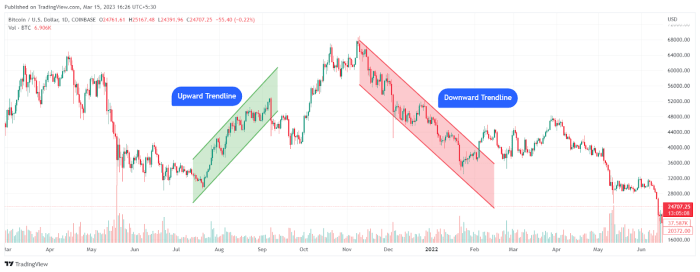
Effective risk management is a crucial aspect of cryptocurrency trading, especially given the market’s notorious volatility. By employing technical analysis, traders can gain valuable insights that help them identify potential risks and make informed decisions to safeguard their investments. Technical analysis utilizes historical price data and indicators to forecast future price movements, allowing traders to develop strategies that mitigate losses and enhance profitability.Technical analysis offers several risk management techniques that traders can implement to minimize potential losses.
These strategies focus on setting stop-loss orders, position sizing, and utilizing technical indicators to define risk-reward ratios. By understanding these techniques, traders can navigate the cryptocurrency market more confidently.
Strategies for Minimizing Losses Using Technical Insights
Incorporating risk management strategies based on technical insights is essential for any trader looking to thrive in the crypto space. Here are several effective techniques to consider:
1. Setting Stop-Loss Orders
Stop-loss orders are essential tools that automatically close a trade at a predetermined price to limit losses. By analyzing support and resistance levels, traders can set stop-loss orders just below key support levels, thus minimizing risk while allowing for normal price fluctuations.
2. Position Sizing
Position sizing involves determining the appropriate amount of capital to allocate to a specific trade based on the trader’s risk tolerance and the size of their trading account. By employing the Kelly Criterion or fixed-percentage methods, traders can ensure they do not overcommit their funds to a single trade, thereby preserving their capital during losing streaks.
3. Using Technical Indicators
Many technical indicators assist in assessing market conditions and potential entry and exit points. For instance, the Moving Average Convergence Divergence (MACD) can signal when to enter or exit a trade based on momentum changes. Similarly, the Relative Strength Index (RSI) can indicate overbought or oversold conditions, guiding traders on when to adjust their positions.
4. Risk-Reward Ratios
A good risk-reward ratio helps traders maintain profitability over time. By ensuring that potential rewards outweigh the risks (e.g., aiming for a 3:1 ratio), traders can make educated decisions and remain resilient during market downturns.
5. Diversification
Diversifying a portfolio can help mitigate risks associated with specific cryptocurrencies. By spreading investments across different assets, traders can cushion against adverse price movements in any single cryptocurrency.Implementing these risk management strategies based on technical insights allows traders to approach the cryptocurrency market with a structured plan. By doing so, they not only protect their investments but also enhance their chances of long-term success in this dynamic trading environment.
The Evolution of Technical Analysis in the Cryptocurrency Market
The world of cryptocurrency has rapidly transformed how traders approach their investments. As digital currencies such as Bitcoin and Ethereum gained popularity, technical analysis (TA) adapted significantly to accommodate the unique characteristics of this volatile market. This evolution reflects traders’ need for effective strategies that account for the distinct behaviors of cryptocurrencies compared to traditional assets.Since the inception of Bitcoin in 2009, technical analysis has witnessed a remarkable transition.
Initially, traders relied on basic charting methods similar to those used in traditional stock markets. However, the heightened volatility and 24/7 trading hours of cryptocurrency markets necessitated the development of more sophisticated analytical tools. Unlike stocks, which have predictable market hours, cryptocurrencies operate continuously, presenting unique challenges and opportunities for traders. This has led to an increased reliance on real-time data analysis and algorithmic trading strategies.
Historical Perspectives on the Effectiveness of Technical Analysis in Crypto Trading
The effectiveness of technical analysis in cryptocurrency trading has been subject to extensive analysis since the market’s inception. Early adopters of TA observed significant price movements that often followed recognizable patterns. For instance, the 2017 bull run saw Bitcoin’s price surge from around $1,000 to nearly $20,000 within a year, providing ample opportunities for traders employing technical indicators such as moving averages and relative strength index (RSI).
These indicators helped traders identify entry and exit points, capitalizing on market momentum.As the cryptocurrency landscape matured, traders began to refine their technical analysis strategies. The introduction of new cryptocurrencies and the growing complexity of trading pairs prompted the development of more advanced tools, such as candlestick patterns and Fibonacci retracement levels. Traders started to recognize that these indicators could provide insights into market sentiment and potential reversals, leading to more informed trading decisions.
Comparison of Tools Used in Traditional Trading Versus Cryptocurrency Trading, Benefits of using technical analysis for cryptocurrency trading
The tools and techniques that traders employ in traditional financial markets differ significantly from those utilized in cryptocurrency trading. Traditional markets typically rely on well-established indicators and patterns, such as Bollinger Bands and MACD, which have historically demonstrated reliability. In contrast, cryptocurrency trading has prompted the innovation of new tools that account for its inherent volatility and unique market dynamics.The following are key distinctions between traditional trading tools and those adapted for cryptocurrency:
- Volatility Metrics: Cryptocurrencies exhibit extreme price fluctuations that necessitate the use of specialized volatility indicators, such as the Average True Range (ATR), to gauge potential price swings.
- Volume Analysis: Unlike traditional markets, where volume data is often more stable, cryptocurrency trading requires a deep analysis of volume spikes to identify potential market manipulation or trends.
- Sentiment Analysis: Social media sentiment analysis tools have emerged to capture trader sentiment in real-time, providing insights that are critical in the fast-paced crypto environment.
- Market Depth Charts: These charts are essential in cryptocurrency trading, helping traders assess liquidity and identify potential support and resistance levels more accurately than traditional order books.
In conclusion, the evolution of technical analysis in the cryptocurrency market reflects the ongoing adaptation of traders to a rapidly changing financial landscape. With each passing year, as new tools and strategies emerge, traders continue to refine their approaches, striving for success in this dynamic market.
Building a Personalized Trading Strategy Using Technical Analysis: Benefits Of Using Technical Analysis For Cryptocurrency Trading
Creating a personalized trading strategy is essential for any cryptocurrency trader looking to maximize their profits while managing risk. Technical analysis provides valuable insights into price movements and market trends, enabling traders to develop effective strategies tailored to their specific needs. Here, we will detail a framework for building a personalized trading strategy by integrating various technical analysis techniques into one cohesive approach, along with successful examples from experienced traders.Developing a personalized trading strategy involves several essential steps that guide traders through the analysis of market data, risk management, and decision-making processes.
These elements work together to provide a structured approach to trading that aligns with individual trading goals and risk tolerance.
Components of a Personalized Trading Strategy
A well-rounded trading strategy encompasses various components that help in decision-making. Below are the key elements to consider when constructing your personalized strategy:
- Market Analysis: Begin by analyzing the cryptocurrency market. Use charting software to identify support and resistance levels, trend lines, and price patterns. Recognizing these critical areas aids in formulating entry and exit points.
- Indicators Selection: Choose technical indicators that resonate with your trading style. Common indicators include moving averages, RSI (Relative Strength Index), and MACD (Moving Average Convergence Divergence). Each indicator provides unique insights into market momentum and price trends.
- Risk Management: Establish clear risk management rules, including setting stop-loss orders and position sizing. A well-defined risk strategy protects your capital and helps avoid emotional decision-making.
- Backtesting: Test your strategy using historical data. This process involves simulating trades based on your strategy to evaluate its effectiveness and identify areas for improvement.
- Continuous Learning: Stay updated on market trends and continuously learn from your trading experiences. Adapt your strategy based on changing market conditions and personal performance.
Integrating multiple technical analysis techniques ensures a comprehensive approach to trading. For instance, combining trend analysis with oscillators helps confirm trends before making a trade. A trader using both moving averages to identify direction and RSI for overbought or oversold signals can make more informed decisions.
“Successful trading is not about being right all the time; it’s about managing your risk and knowing when to cut losses.”
Examples of Successful Personalized Strategies
Diverse strategies employed by seasoned traders demonstrate the effectiveness of personalized approaches. For example, a trader specializing in Day Trading may rely heavily on short-term moving averages combined with momentum indicators to capture rapid price movements within the day. By using a 5-minute chart with the 9 and 21-period moving averages, this trader can identify crossovers that signal entry and exit points.Another strategy employed by long-term investors includes the use of Fibonacci retracement levels to identify potential reversal points in the market, coupled with the MACD to confirm the momentum behind these price movements.
This approach allows traders to enter positions at favorable prices while managing their exposure to market risks effectively.By understanding how to build and personalize a trading strategy using technical analysis, traders can enhance their decision-making process, find more consistent results, and ultimately achieve greater success in the ever-evolving cryptocurrency market. In addition, implementing these strategies with discipline and continuous evaluation sets a strong foundation for a thriving trading career.
Ending Remarks
In conclusion, the benefits of using technical analysis for cryptocurrency trading are profound and far-reaching. By integrating a range of tools and strategies, traders can develop personalized approaches that suit their unique styles and market conditions. As this analytical practice continues to adapt and evolve alongside the cryptocurrency market, its importance in shaping successful trading strategies will only grow. Embrace the power of technical analysis and unlock your potential in the exciting world of cryptocurrency trading.